- 現在位置
- トップ > 白書・統計・出版物 > 白書 > 文部科学白書(英文) > 2024年 文部科学白書(英文) > Special Feature 1: Future Vision for Improving Japan’s “Collective Knowledge and Wisdom” -Reconstructing the Higher Education System-
Special Feature 1: Future Vision for Improving Japan’s “Collective Knowledge and Wisdom” -Reconstructing the Higher Education System-
Section1 General Overview
In accordance with the “Grand Design for Higher Education toward 2040 (Report)” (hereinafter referred to as the “Grand Design Report”) issued by the Central Council for Education in November 2018, the Ministry of Education, Culture, Sports, Science and Technology (hereinafter referred to as “MEXT”) has been working toward 2040 to shift to learner-oriented education that enables learners to clearly recognize their learning outcomes, to ensure diversity and flexibility in education and research systems, to strengthen quality assurance and information disclosure, and to promote discussions on higher education at the regional level. Alongside these efforts, changes in learning at the elementary and secondary education levels, as well as an increase in the enrollment rate among students from low-income households following the introduction of the new financial support system for higher education, have been observed. In the meantime, Japan is experiencing a rapid decline in the birthrate, growing instability in the international affairs, and significant advances in AI technology.
Under such circumstances, in order for higher education institutions to fully fulfill their expected roles, it is necessary to further enhance the quality of education and research at each institution while taking into account the appropriate overall scale of higher education going forward, ensuring access to high-quality higher education in each region, and clarifying the division of roles among national, public, and private establishing organizations and institutions. In September 2023, then MEXT Minister Moriyama requested the Central Council for Education to deliberate on the “Future of Higher Education in Light of Japan’s Rapidly Declining Birthrate.”
Following this, a “Special Subcommittee on the Future of Higher Education” was set up under the University Subcommittee of the same Council. After approximately one year and five months of deliberations, the Central Council for Education compiled a report, entitled, Future Vision for Improving Japan’s “Collective Knowledge and Wisdom” - Reconstructing the Higher Education System – (hereinafter referred to as the “Collective Knowledge and Wisdom Report”) in February 2025.
Sections 2 and 3 present the main details of the “Collective Knowledge and Wisdom Report,” while Section 4 introduces initiatives to be implemented based on this Report.
Section 2 Vision for the Future of Higher Education
1. Challenges and Past Policies on Higher Education
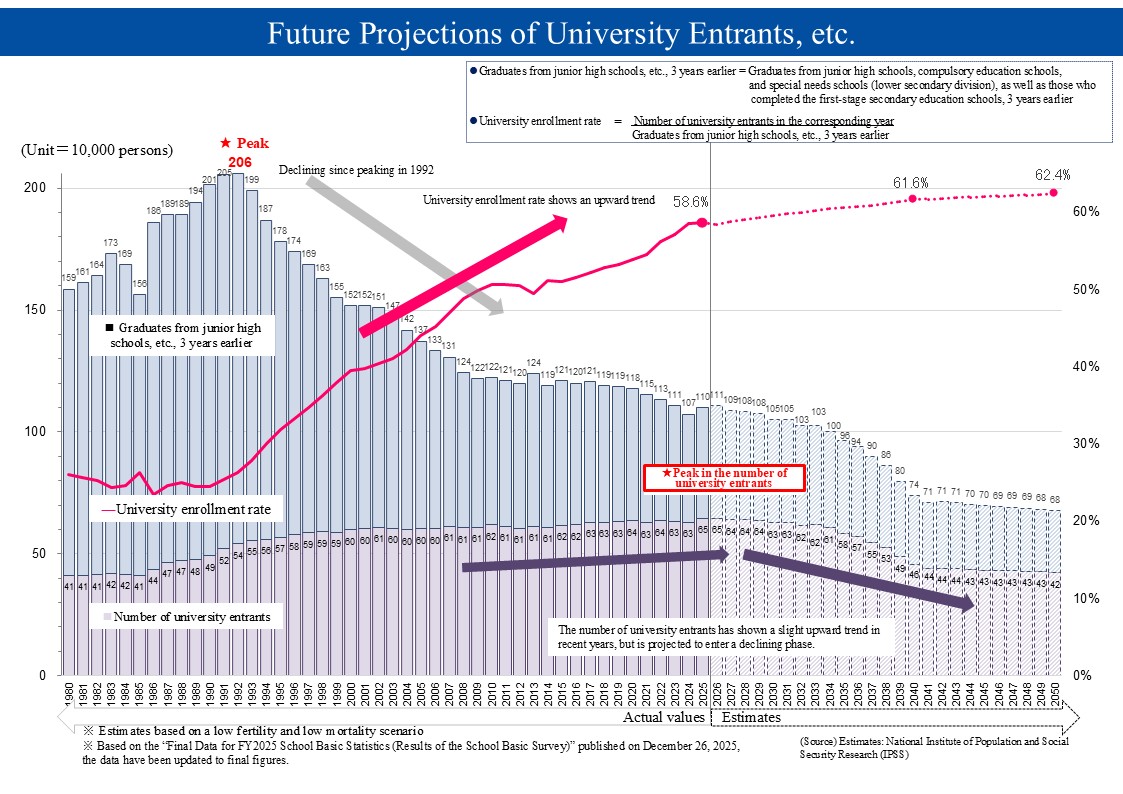
The world is facing challenges, including environmental issues including climate change; shortages of food, water, resources, and energy; explosive population growth; heightened international tensions; instability in the global economy; and both the efficiency gains and potential risks brought about by advances in AI. In addition to these global circumstances, one of the most pressing challenges in Japan is the rapid decline in the birthrate. The number of university entrants is projected to decrease significantly from the present level of approximately 630,000 to around 590,000 in 2035 and about 460,000 in 2040, representing roughly 73% of current enrollment capacity (Figure 1-1-1).
Policies concerning higher education have included measures related to “quantity” through establishment approval and subsidies; those related to “quality” through institutional reforms; economic support measures, including the introduction of the new financial support system; and those concerning university management. However, efforts to strengthen educational management remain incomplete, as students still spend relatively little time on learning outside the classroom. Various challenges surrounding higher education have been pointed out, including intensifying competition for international students, the growing need for recurrent education and reskilling, a relative decline in research capabilities, and regional disparities in collaboration between higher education institutions and local governments.
2. Vision for the Future of Higher Education
(1) Future Vision of Society and Human Resource Development
Taking into account rapid population decline and other societal changes, as well as shifts in the circumstances surrounding higher education, the future vision of society we aim for is a “sustainable and vibrant society centered on the realization of respective happiness for each individual and the well-being of society as a whole.” We believe that we should develop people who continue to learn, who identify and solve problems in collaboration with others, and who are equipped with the ability to truly accomplish their goals, as human resources who will support and shape such a society.
(2) Vision for the Future of Higher Education
In order to realize this future vision, it is essential to enhance “Collective Knowledge and Wisdom.” “Collective Knowledge and Wisdom” is determined by the product of the number of people and their capabilities. Higher education institutions play an indispensable role in nurturing future leaders and creating new societal value. By further strengthening their educational and research functions, they are called upon to play a central role in enhancing “Collective Knowledge and Wisdom” while contributing to society. Also, it is necessary to apply the resulting “Collective Knowledge and Wisdom” to society. This role that higher education institutions continue to play is indispensable for Japan’s further growth and development.
Furthermore, it is also necessary that all motivated individuals who wish to study at higher education institutions be able to have access higher education. At the same time, higher education institutions must also fulfill their role as places where people can experience happiness, purpose, and a sense of fulfillment that cannot be measured solely by economic growth and achieve personal growth, while also serving as venues where diverse students, faculty, staff, and other stakeholders come together.
Taking these points into consideration, in order to enhance “Collective Knowledge and Wisdom,” it is necessary to improve the quality of education and research, provide educational opportunities at a socially appropriate scale, and ensure access from geographical and socioeconomic perspectives, thereby realizing equal educational opportunities in higher education.
(3) Objectives of Higher Education Policy
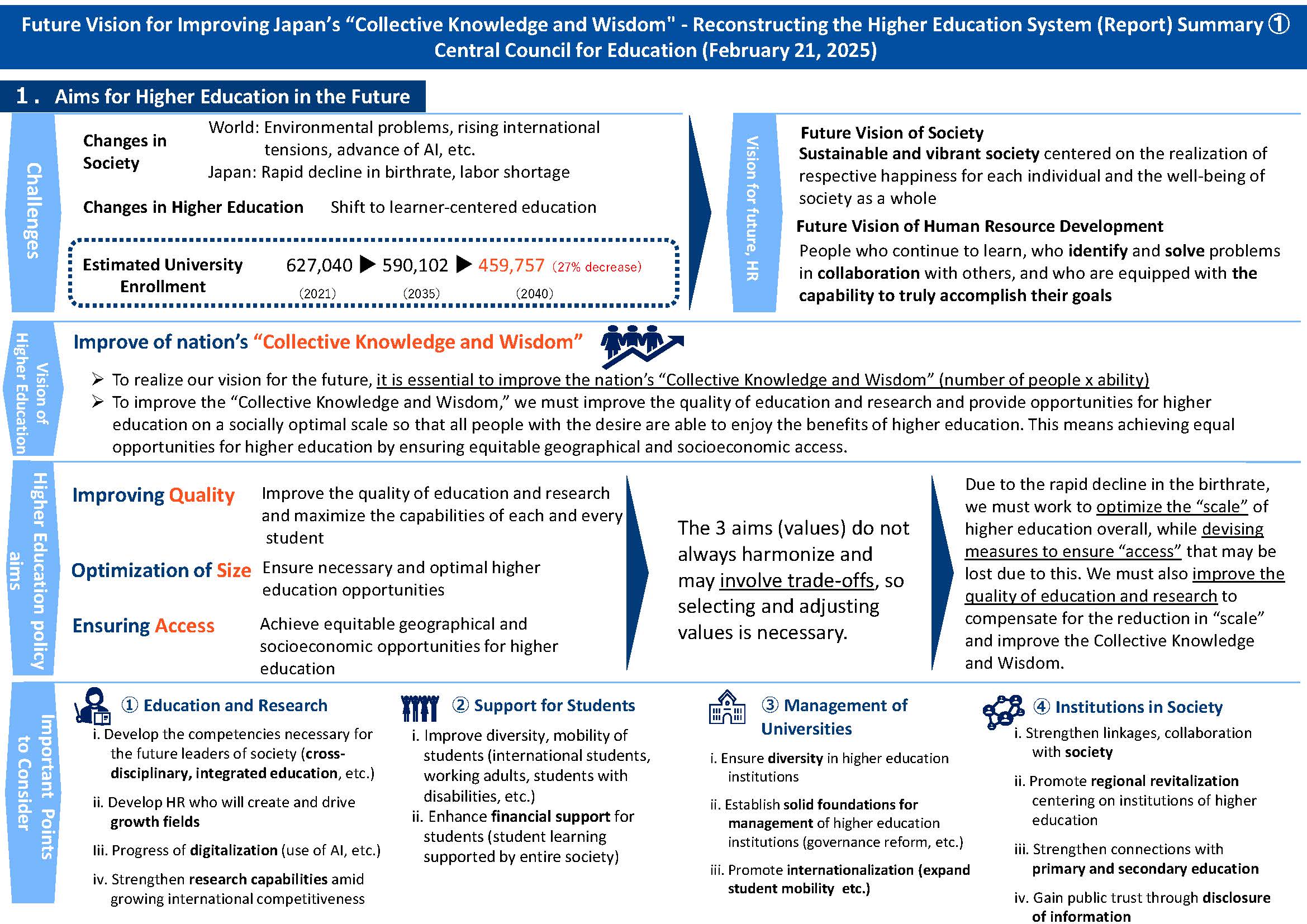
The “Collective Knowledge and Wisdom Report” identifies three objectives to be pursued for higher education policy: Quality, Size, and Access. Here, “quality” refers to maximizing each student’s capability by enhancing the quality of education and research; “size” refers to quantitatively ensuring socially appropriate and necessary higher education opportunities; and “access” refers to achieving equal opportunities for higher education from geographical and socioeconomic perspectives.
These three objectives (values) do not always harmonize and may involve trade-offs, thereby requiring the selection and adjustment of values. In light of the rapid decline in birthrate, etc., it is necessary to reconstruct the higher education system by optimizing the overall “size” of higher education, and taking measures to ensure “access” to higher education might otherwise be lost, enhancing the “quality” of education and research to improve “Collective Knowledge and Wisdom”(Figure 1-1-2).
(4) Important Points to Consider
In realizing the vision for the future of higher education, the following four perspectives are identified as key priorities:
- The perspective of education and research, including developing the competencies necessary for the future leaders of society, developing HR who will create and drive growth fields, progress of digitalization, including the use of AI, etc., strengthening research capabilities amid growing international competitiveness.
- The perspective of support for students, including improving the diversity and mobility of students such as international students, working adults, students with disabilities, and enhancing financial support for students.
- The perspective of managing higher education institutions, including ensuring diversity, establishing a solid management foundation, expanding student mobility, and promoting internationalization.
- The perspective of higher education institutions in society, including strengthening linkages and collaboration with society, promoting regional revitalization with a focus on human resource development, strengthening connections with primary and secondary education, and gaining public trust through disclosure of information.
Section 3 Future Direction of Higher Education Policies
1. Further Improve the Quality of Education and Research
(1) Further Promotion of Learner-centered Education
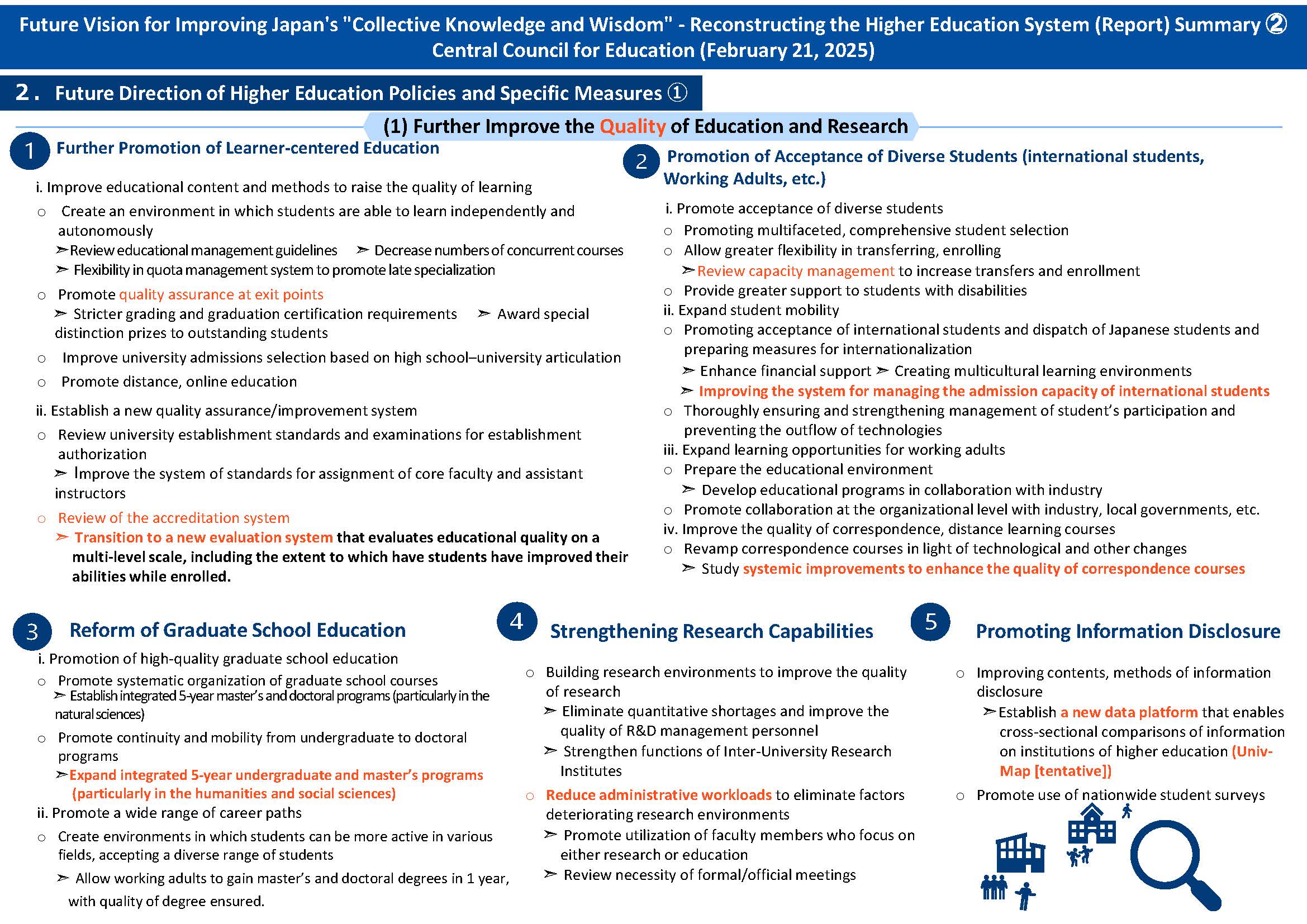
It is necessary to continue working toward the realization of learner-centered education, as outlined in the Grand Design Report. As part of efforts to improve educational content and methods to raise the quality of learning, it is necessary to create an environment in which students are able to learn independently and autonomously by reviewing educational management guidelines, reducing the number of concurrent courses, and ensuring flexibility in the quota management system to promote late specialization(*1), etc. It is also important to promote quality assurance at exit points through stricter grading and graduation certification requirements and the awarding of special distinction prizes to outstanding students, as well as to improve university admissions selection based on high school–university articulation and promote distance and online education.
Furthermore, in order to enhance “Collective Knowledge and Wisdom” and raise the capabilities of each individual, it is necessary to establish a new system for quality assurance and enhancement in higher education. This should be done from the perspective of placing greater emphasis on quality improvement and further developing the qualitative transformation and quality assurance discussed in successive reports(*2). Therefore, in addition to improving the system of standards for assigning core faculty and assistant instructors, it is necessary to review the accreditation system and promote the transition to a new evaluation system that assesses educational quality on a multi-level scale, including the extent to which students have improved their abilities while enrolled (Figure 1-1-3).
(2) Promotion of Acceptance of Diverse Students, including International Students, Working Adults
In order for each individual fully realize their potential, acquire the skills needed to thrive in future society, and contribute to enhancing Japan's “Collective Knowledge and Wisdom,” it is necessary for higher education institutions to transform from uniform educational settings designed by those providing instruction into places (campuses that accept values of diverse students) where diverse individuals with varied values gather, fostering interaction and creating new value.
Efforts are being made to accept diverse students by reviewing capacity management to advance multifaceted, comprehensive student selection and increase transfers and enrollment, as well as by providing greater support to students with disabilities. In addition, through enhancing financial support, promoting the creation of multicultural learning environments, and considering improvements to the system for managing the admission capacity for international students, the government is working to expand international student mobility through the studying abroad of Japanese students and the acceptance of international students, as well as preparing measures for internationalization at universities. At the same time, it is essential to ensure strict compliance with security export control and to thoroughly implement international student enrollment management while accurately monitoring students’ academic performance, activities other than that permitted under the status of residence previously granted, and other relevant circumstances.
Furthermore, regarding the acceptance of a wide range of students, including working adults, it is necessary to expand learning opportunities for working adults through the development of educational programs in collaboration with industry and through collaboration at the organizational level with industry, local governments, and others. It is also important to further enhance the quality of correspondence (distance learning) courses in light of changing times. This includes establishing educational management systems that take advantage of the unique characteristics of correspondence courses, and promoting the development of educational support systems that respond to the diverse attributes of students.
(3) Reform of Graduate School Education
From the perspective of maximizing each student's potential, it is crucial for graduate schools to provide higher-quality education. In addition, curricula should actively respond not only to the individual needs of learners but also to the broader needs of society, including those of industry and the international community. It is also necessary to make graduates’ performance in society more visible and to strengthen systematic support for career development. On the other hand, efforts and cooperation by companies, such as expanding recruitment, improving compensation, and supporting employees in obtaining doctoral degrees, are indispensable. To further promote such proactive initiatives within industry, closer collaboration among industry, academia, and government is also required.
In order to promote high-quality graduate education, it is necessary to advance the systematic organization of graduate programs. This includes establishing integrated five-year master’s and doctoral degree programs, substantially expanding integrated bachelor’s–master’s programs, fostering diverse and inclusive learning environments, and ensuring diversity supported by greater student mobility by reducing the prevalence of automatic internal advancement.
(4) Strengthening Research Capabilities
In university education, which is supported by the two pillars of “education” and “research,” it is essential to develop an environment that enables researchers to devote themselves to both teaching and research in order to provide high-quality education and achieve excellent research outcomes. In doing so, it is important to approach this from two perspectives: further enhancing the research environment and removing factors that may hinder it.
To this end, it is necessary to build a high-quality research environment by eliminating quantitative shortages and improving the quality of the R&D management professional, as well as by strengthening the functions of inter-university research institutions. It is also important to promote the utilization of faculty members who respectively focus on research and education, reduce administrative workloads by reviewing the necessity of formal/official meetings to remove factors that hinder the research environment, and continuously and stably support reforms by each university aimed at enhancing research capabilities.
(5) Promoting Information Disclosure
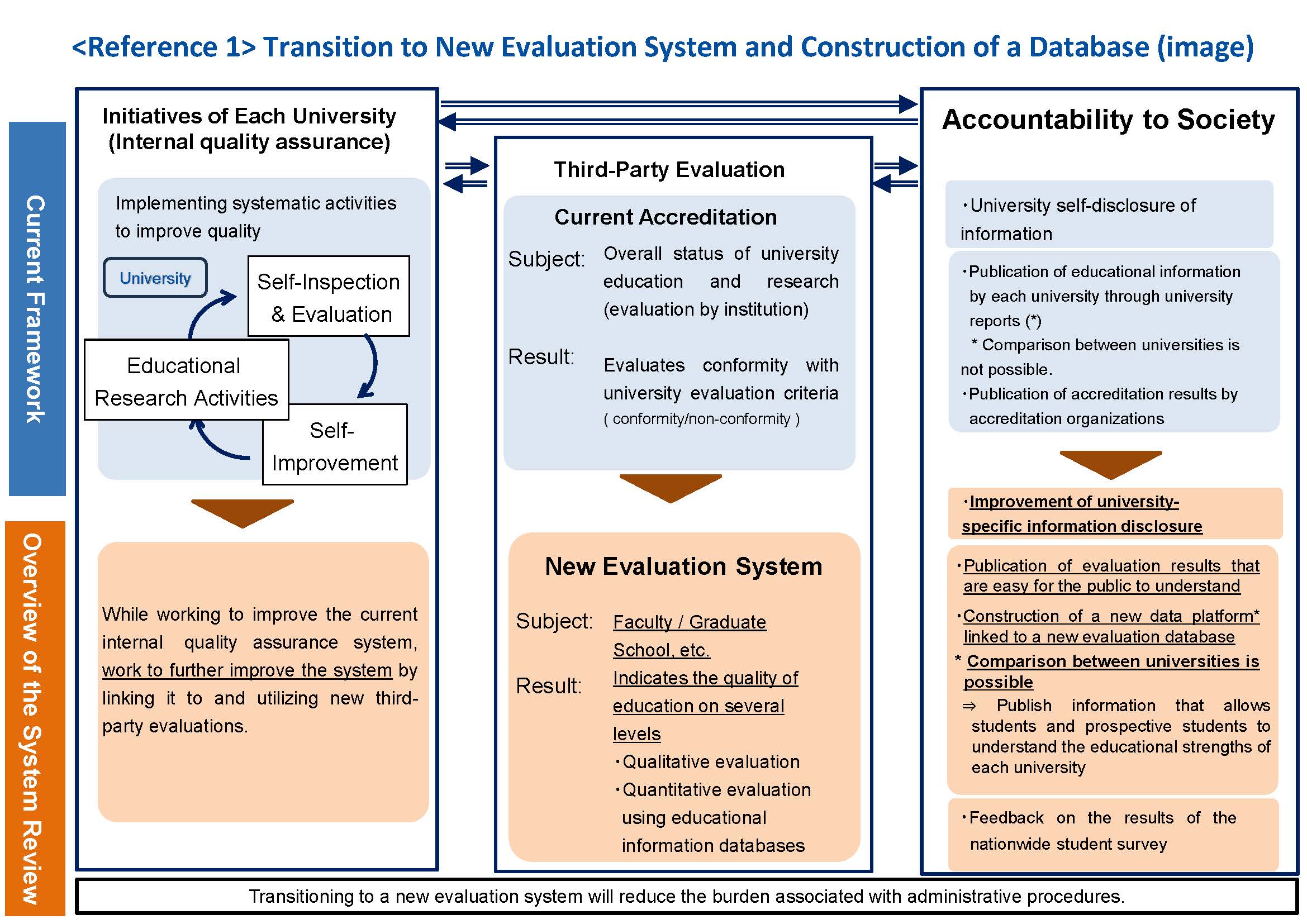
If higher education institutions fail to communicate appropriate information, differences in the selectivity of admissions, which arise from factors such as institutional size, location, and reputation, may accelerate the consolidation of institutions, and their efforts to enhance the quality of education and research may not receive proper recognition from society as a whole. In the future, in order to enable diverse prospective students, including international students and working adults, to choose universities that best meet their objectives and to support their decision to pursue master's and doctoral programs, it is essential to further promote the disclosure of information on education and research by each higher education institution.
Currently, the “University Portraits,” which are independently operated by the university community, have proven effective in disseminating diverse educational information from each institution. On the other hand, it has been pointed out that, because different platforms are used for national/public and private universities, important information related to the quality of university education and research is not always presented in a clear and easily understandable manner. While referencing the situations in other countries, it is necessary to further promote information disclosure by building a new data platform called Univ-Map (tentative). This platform will draw on the practices and insights cultivated through the University Portraits initiative and enable cross-institutional comparisons of higher education institutions, not limited to simple numerical indicators and not dependent on establishing organizations (Figure 1-1-4).
2. Optimizing the “Size” of Higher Education Overall
Higher education administration has shifted from an era focused on “formulating higher education plans and implementing various regulations” to one centered on “presenting future visions and guiding policy,” during which university enrollment capacity have gradually increased. On the other hand, amid the rapid decline in the birthrate, it has become unavoidable to discuss collaboration, reorganization, integration, downsizing, and withdrawal among higher education institutions that transcend the frameworks of individual establishing organizations. Consequently, a review of the appropriate overall size of higher education is required.
(1) Strengthening the Functions of Higher Educational Institutions
Currently, the number of prospective students seeking higher education is roughly in balance with the enrollment capacity of higher education institutions. However, as the number of students entering at age 18 continues to decline, an oversupply is expected, leading to a further deterioration in capacity utilization rates. As a result, each higher education institution may fail to secure the minimum number of students necessary for its operation, which could lead to a deterioration in its financial condition and make it difficult to maintain the “quality” of its education and research.
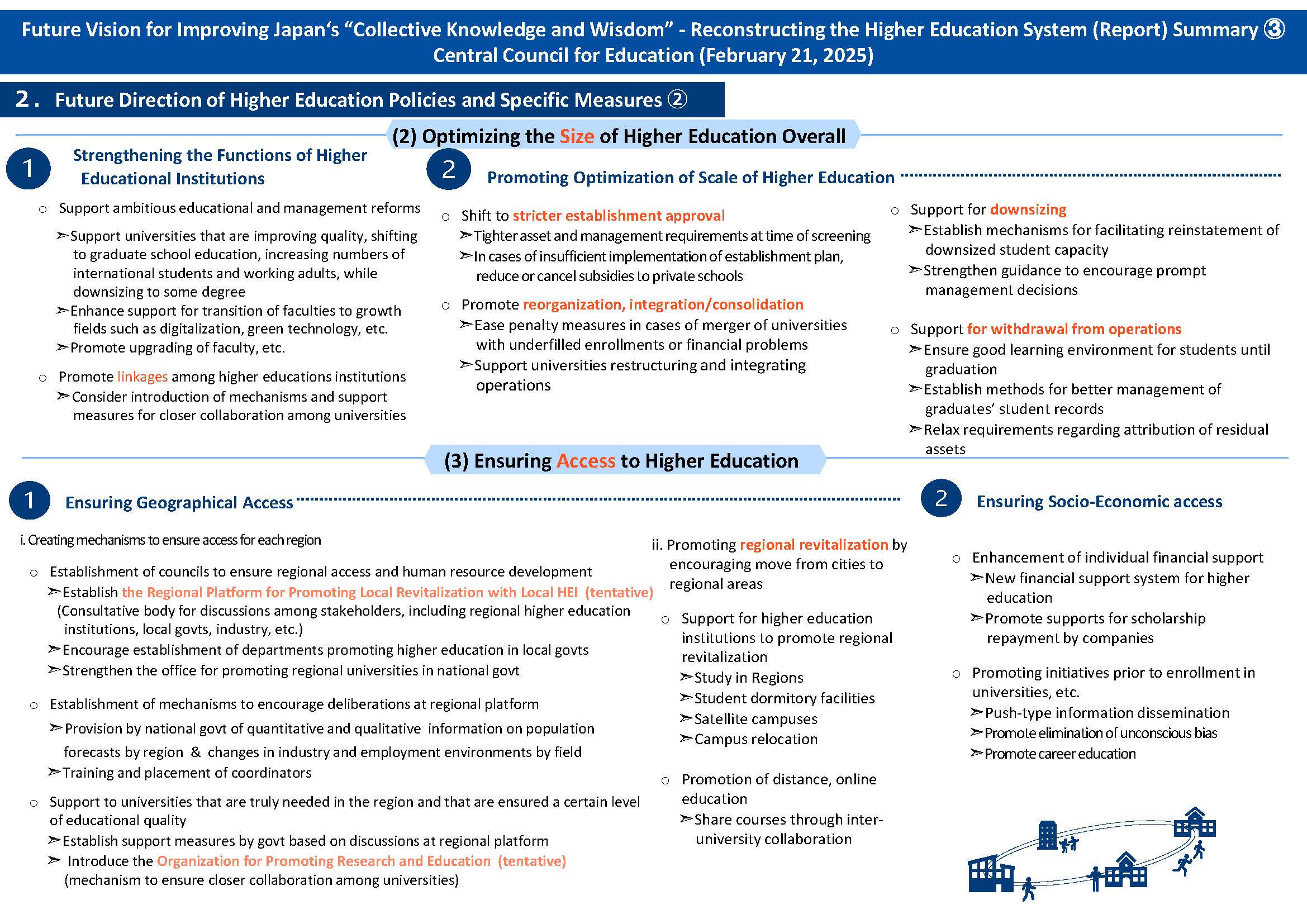
Amidst these circumstances, while reducing the overall size to a certain extent, it is necessary to promote support for ambitious educational and management reforms through such measures as enhancing the S/T ratio (the ratio of students per faculty member); shifting enrollment capacity and resources to graduate schools; providing support to universities that are working to increase the number of international students and working adults while ensuring quality; strengthening support for the conversion of undergraduate programs to growth fields such as digital and green technologies; and promoting the professional development of faculty and staff. At the same time, it is essential to promote collaboration among higher education institutions by considering the introduction of mechanisms and support measures for closer collaboration among universities.
(2) Promoting the Optimization of the Size of Higher Education Overall
Regarding the optimization of the overall size of higher education, it is necessary to support restructuring, integration, downsizing, and withdrawal, taking into account regional and societal needs, while also drawing on examples of measures related to restructuring implemented by other institutions.
In this context, it is imperative that all higher education institutions firmly recognize that this issue directly concerns them and cannot be regarded as someone else’s matter, regardless of distinctions based on the type of institution, such as universities, professional and vocational universities and professional and vocational junior colleges, graduate schools and professional graduate schools, junior colleges, KOSEN, and Professional Training Colleges, or by establishing organization, whether national, public, or private.
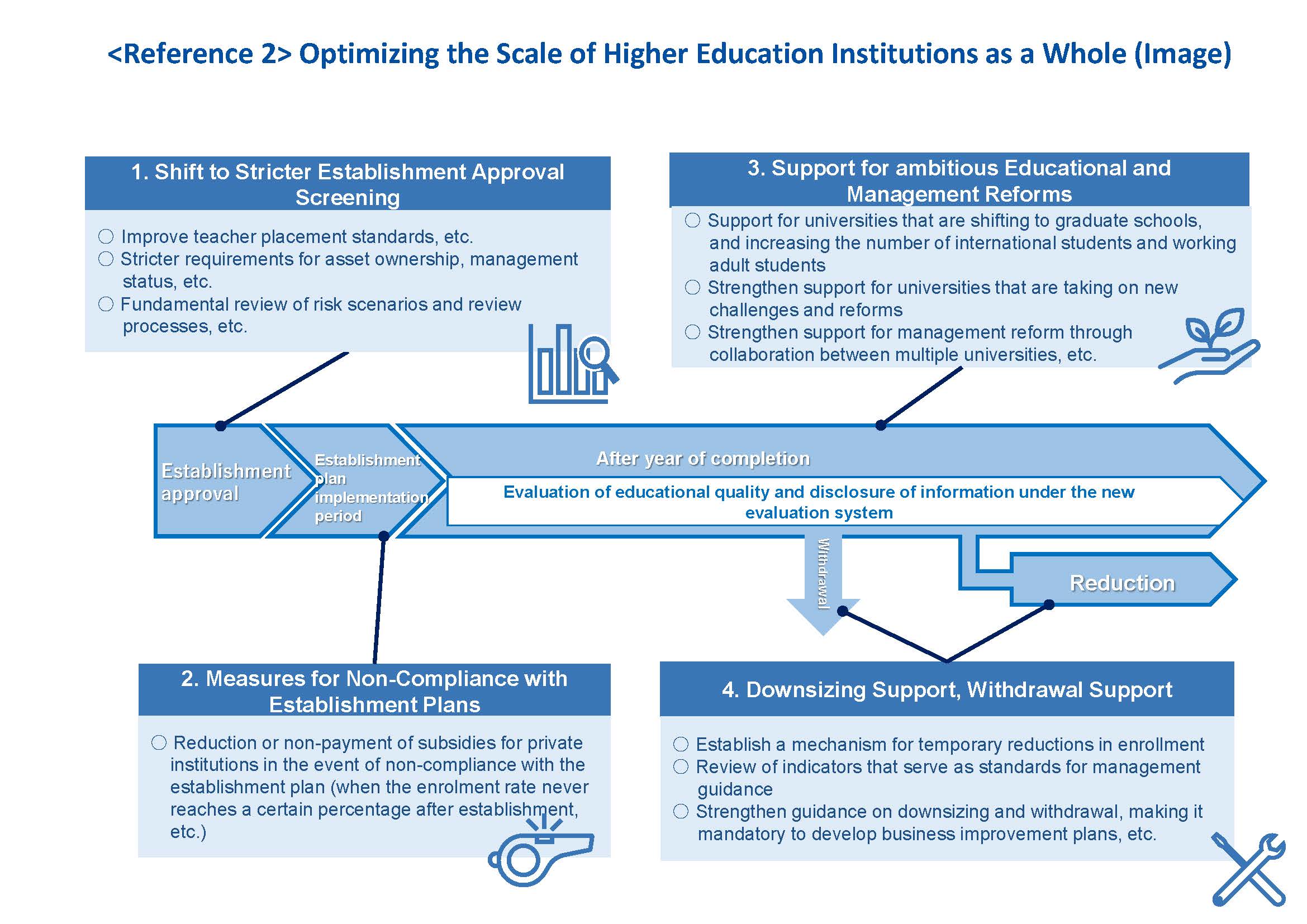
Furthermore, it is necessary to shift toward stricter establishment approval process, including tightening asset and management requirements at the time of screening and reducing or canceling subsidies to private schools in cases of insufficient implementation of the establishment plan.
In addition, these efforts should be promoted through measures such as easing penalty in cases of mergers involving universities with underfilled enrollments or financial difficulties and providing support to universities engaged in restructuring and integration. It is also necessary to support downsizing by establishing mechanisms that make it easier to reinstate temporarily reduced student capacity and by strengthening guidance to encourage prompt management decisions. Furthermore, support for withdrawal from operations should include securing a good learning environment for enrolled students until graduation, establishing methods for better management of graduates’ student records, and relaxing requirements regarding the attribution of residual assets (Figure 1-1-5).
3. Securing “Access” to Higher Education
(1) Ensuring Geographical Access
Enrollment rates and capacity for higher education institutions vary by region, and private universities in regional areas tend to experience declining student numbers and increasingly difficult financial conditions due to the rapid decline in the birthrate. At the same time, since there are prospective students who cannot leave their hometowns for various reasons, including financial ones, it is necessary to take measures to ensure access to higher education from a geographical perspective.
The Grand Design Report proposed that regional higher education institutions should go beyond their role in higher education to become the core of their local communities. The report also called for the establishment of regional collaboration platforms where these institutions, together with industry and local governments, could discuss future visions and concrete measures for cooperation and exchange, as well as for the introduction of the University Collaboration Promotion Corporation as a framework for collaboration that transcends the boundaries of national, public, and private institutions. As a result, efforts have begun in several regions, including regional collaboration platforms in which all universities in the region participate to develop educational programs and provide support for higher education advancement and employment. Other examples include efforts that enhance liberal arts education and promote diverse student exchanges through the establishment of numerous joint courses. On the other hand, it has been pointed out that the current regional collaboration platforms face challenges in fostering a strong sense of ownership and maintaining sufficient speed in addressing issues. Furthermore, some have suggested that efforts should go beyond merely establishing joint courses, and that efforts for educational collaboration utilizing University Collaboration Promotion Corporations should be further advanced.
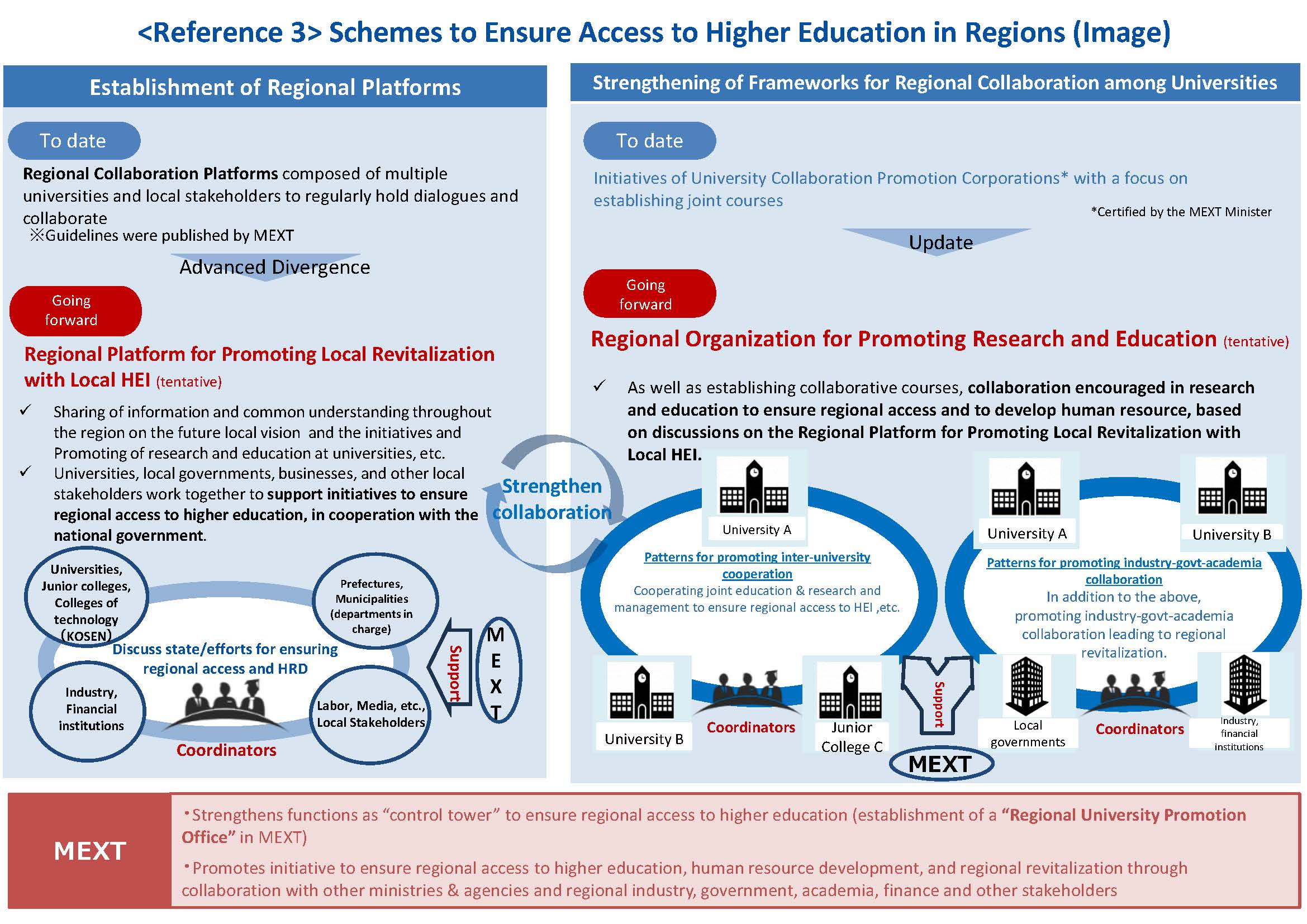
Therefore, it is first necessary to further develop regional collaboration platforms so that each higher education institution can leverage its strengths and unique characteristics, ensure access to higher education in the region, and foster the human resources needed locally. Through these platforms, higher education institutions will be able to share a common understanding of the circumstances, challenges, and future human resource needs surrounding higher education in their respective regions. They will also provide a venue where local governments, industry, and other regional stakeholders can come together, engage in integrated discussions, and move toward concrete initiatives. To this end, it is essential to establish a consultative body, tentatively named the “Regional Platform for Promoting Local Revitalization with Local Higher Education Institutions (tentative).” In addition, it is necessary to promote the establishment of departments within local governments that are responsible for the promotion of higher education by clarifying their roles and functions as contact points. At the same time, efforts should be made to strengthen the national government’s command and coordination function for promoting regional universities. Furthermore, in order to encourage deliberations at regional platforms, it is necessary to promote provision by national govt of quantitative and qualitative information on population forecasts by region and changes in industry and employment environments by field, as well as to advance the training and placement of coordinators. Based on the discussions held at these platforms, the government also needs to provide support for higher education institutions that are truly needed in the region and that are ensured a certain level of educational quality. This includes establishing support measures by govt based on discussions at regional platform, and providing mechanism to ensure closer collaboration among universities (Organization for Promoting Research and Education (tentative)).
Furthermore, in order to promote regional revitalization by encouraging move from cities to regional areas, it is important to promote efforts such as domestic study programs, developing student dormitory facilities, establishing satellite campuses, and relocating campuses, as well as advancing distance and online education through measures such as sharing courses via interuniversity collaboration (Figure 1-1-6).
(2) Ensuring Socio-Economic Access
Regarding ensuring economic accessibility, the New Financial Support System for Higher Education was launched in FY2020. Under this system, tuition and admission fees for households exempt from the inhabitants tax and those in equivalent income brackets are reduced or exempted, and grant-type scholarships have been significantly expanded. As a result, opportunities for students from low-income households to advance to higher education institutions have been greatly increased, provided they have a strong awareness of their future career paths and the motivation to pursue higher education. Furthermore, in FY2024, the government has expanded the scope of support—previously unavailable to middle-income households—to include multi-child households with three or more dependent children and students enrolled in undergraduate programs at private universities in the fields of science, engineering, and agriculture, recognizing these groups as particularly in need of financial burden reduction. The enrollment rate in higher education among households exempt from the inhabitants tax was estimated to be approximately 40% in FY2018. However, a sample survey conducted in FY2023 showed that the rate had risen to around 69%, suggesting that this system has contributed to increased enrollment opportunities. Furthermore, starting in FY2025, efforts to reduce educational expenses are advancing, including providing tuition and admission fees free of charge up to a certain amount set by the national government for students from multi-child households, without imposing income restrictions(*3).
Going forward, it will be important to ensure the steady implementation of the new financial support system for higher education, while also enhancing financial support for individuals through measures such as promoting the wider adoption of employer-sponsored scholarship repayment programs. Furthermore, from a social perspective to ensure access, it is also necessary to promote initiatives prior to enrollment in higher education institutions, such as push-type information dissemination, promoting the elimination of unconscious bias (unconscious assumptions), and enhancing career education (Figure 1-1-7).
4. Roles and Collaboration Methods by Institution, Establishing Organization
(1) Roles by Institution
In Japan, a diverse range of higher education institutions has been established, including universities (undergraduate programs), graduate schools, professional graduate schools, professional and vocational universities, professional and vocational junior colleges, junior colleges, colleges of technology (KOSEN), and Professional Training Colleges. Each type of institution differs in its objectives, standard length of study, degree-granting authority, and educational content, thereby providing diverse forms of higher education suited to its distinctive characteristics. Going forward, in light of the changing circumstances surrounding these institutions, it will be required for each to redefine its role and pursue continuous improvement while leveraging its unique features and strengths.
- Universities (undergraduate programs)
Universities, as the core of scholarly activities, shall cultivate a wide range of knowledge, conduct in-depth research in specialized fields, and contribute to the development of society by creating and disseminating new knowledge. - Professional and vocational universities, professional and vocational junior college
Professional and vocational universities and professional and vocational junior colleges, which provide practical vocational education in close collaboration with industry, are expected to foster professionals with practical and creative skills. - Graduate schools / professional graduate school
Graduate schools are expected to provide teaching and researching the theory and application of scholarly activities, master their depths, or foster deep knowledge and outstanding abilities in order to take up occupations requiring high levels of expertise, and contribute to the advancement in culture. They are also expected to play a particularly important role in enhancing Japan’s “Collective Knowledge and Wisdom” going forward. - Junior colleges
Junior colleges cultivate human resources who form the foundation of local communities while strengthening collaboration with local governments and regional industries. Going forward, they are expected to undergo transformation of junior colleges themselves based on the role adapting to the changing times, and improvement of the system based on further educational needs of students completing specialized courses. - Colleges of technology (KOSEN)
Colleges of technology (KOSEN) are higher education institutions that offer a five-year integrated program of engineering education with a strong emphasis on developing practical skills. Going forward, they are particularly expected to further promote the advancement and internationalization of their education. - Professional Training Colleges
Professional Training Colleges play an important role in cultivating human resources essential for supporting the foundations of society while responding flexibly to the needs of society and industry. Going forward, they are expected to further promote practical vocational education and increase number of working adult students, international students.
(2) Role by establishing organization:
Each type of university is expected to fulfill the essential roles associated with its establishing organization. National universities, supported by substantial public funding, are required to further demonstrate the roles inherently expected of them as national institutions. Public universities, based on local public finances and operated with the support of local governments, should align with the founding objectives of their establishing organizations. Private universities are expected to fulfill their roles by striking an appropriate balance between autonomy and public responsibility in accordance with their founding principles. In this way, all institutions are expected to fulfill their respective roles while leveraging their unique characteristics.
Going forward, significant changes are expected in the overall environment surrounding higher education institutions, including the rapid decline in the birthrate. Under these circumstances, each university is required to reexamine its mission, taking into account the roles and functions specific to its establishing organization, renew itself in line with the changing times, and chart its own future direction.
- National Universities
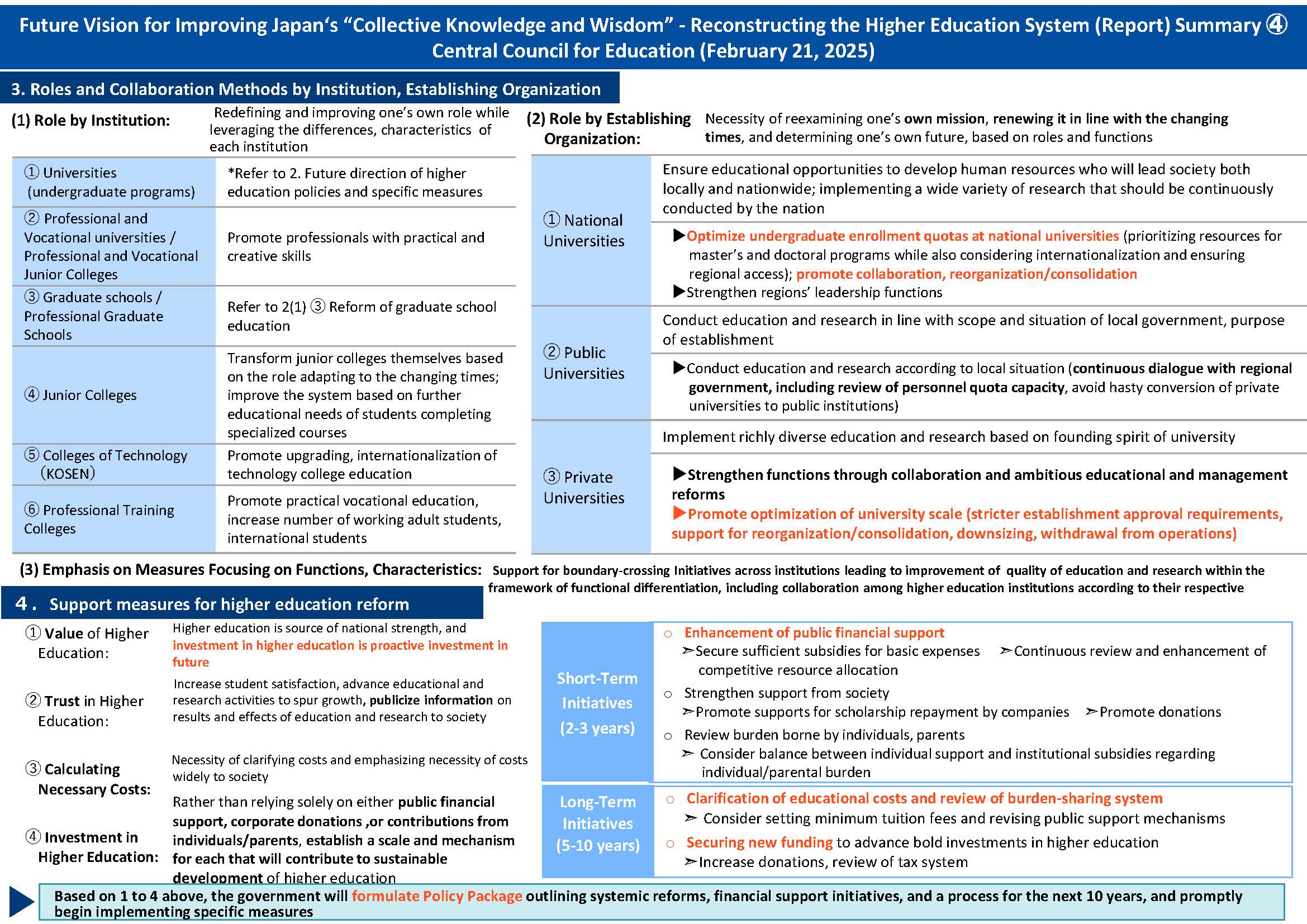
National universities play a role in ensuring educational opportunities to develop human resources who will lead society both locally and nationwide, and in implementing a wide variety of research that should be continuously conducted by the nation. Furthermore, as the social environment continues to change, they are expected to strengthen their functions in line with their respective missions. However, given the projected significant decline in the 18-year-old population, it will be inevitable to review the enrollment capacity for undergraduate programs. From the perspective of enhancing Japan’s “Collective Knowledge and Wisdom,” it is necessary to take into account the actual circumstances of each university, including strengthening and enhancing graduate schools by emphasizing enrollment capacity and resources on master's and doctoral programs, expanding the acceptance of international students and working adults to ensure diversity, and focusing resources on new interdisciplinary fields. Furthermore, considering the role national universities play in ensuring access to higher education in regional areas, it is also necessary to review the appropriate level of enrollment capacity. - Public Universities
Public universities are expected to conduct education and research in line with the scope and situation of local governments and the purpose of their establishment. Furthermore, upon establishing mechanisms to ensure accessibility from a geographical perspective, public universities are expected to leverage their distinctive strengths-such as, providing education tailored to the direct needs of local governments and their accumulated insights gained through constant engagement with local governments. They are also expected to play an active role in fostering collaboration among industry, academia, and government within the region. Reviews should be made regarding the enrollment capacity of public universities, taking into account regional realities such as the situations surrounding higher education institutions. Furthermore, as mentioned earlier, regarding the conversion of private universities to public status, it is necessary to continue avoiding hasty establishment. Careful consideration is required, including thorough examination of regional human resource needs and future operational prospects. - Private Universities
Private universities are expected to continue implementing diverse educational and research activities in accordance with their founding principles and contemporary missions derived from them, while striking an appropriate balance between autonomy and public responsibility. Also, in ensuring access to higher education, private universities are expected to play an active role by leveraging their founding principles and the unique functions that only they can fulfill, through proactive collaboration with other universities and institutions. On the other hand, similar to national and public universities, private universities inevitably face the need to review their enrollment capacity in view of the continuing rapid decline in the birthrate. Therefore, it is essential for the government to promote support for universities that are pursuing ambitious educational and managerial reforms and working to optimize their size.
(3) Emphasis on Measures Focusing on Functions, Characteristics:
The approaches to human resource development at universities differ depending on the knowledge and abilities of the students as well as the future vision of human resource development they aim to achieve. It is essential for each university to make the most of its educational resources and further build on its strengths. To maximize the educational and research functions of each university, it is required for universities to focus on their respective functions—such as those emphasizing comprehensive liberal arts education, those training specialized professionals or providing education in specific specialized fields, and those placing greater emphasis on research—while optimizing enrollment capacity and resources at both the undergraduate and graduate levels to carry out education and research aligned with their missions.
Furthermore, as higher education institutions as a whole move toward greater functional differentiation, it will become increasingly important for institutions to collaborate across regional and establishing organization frameworks, in ways aligned with their respective functions, in order to further strengthen their distinctive capabilities and characteristics. Therefore, the government is required to provide support tailored to the functions and characteristics of each institution, regardless of the type of establishing organization.
5. Support Measures for Higher Education Reform
(1) Basic Concept
- Value of Higher Education:
In considering support for higher education reform, it is necessary to reexamine whether society truly recognizes the value of higher education. Higher education should not be valued solely by individual students, prospective students, or their parents, but must fundamentally serve society as a whole, contributing to its development. As has been repeatedly pointed out in successive reports, higher education serves as a wellspring of national strength. It is responsible for cultivating a diverse and robust pool of human resources—including individuals who support the foundations of society and everyday life, drive regional growth and development, and play active roles in cutting-edge and globally competitive fields—as well as for generating knowledge and innovation through academic research. Therefore, investment in higher education should be regarded as a forward-looking investment in the future. - Trusting Higher Education:
For higher education institutions to earn the trust of society, it is important that their graduates not only recognize the value of education, including their own personal growth, and contribute actively to society, but also strengthen collaboration with industry, etc. through personnel exchanges, joint research, and other partnerships, thereby fostering public understanding of the educational, research, and regional contributions of their alma maters. From this perspective, higher education institutions are expected to increase student satisfaction, advance educational and research activities to spur growth, while engaging in activities that leverage their respective strengths and roles.
They should also continue to publicize information on results and effects of education and research to society. Furthermore, each institution is expected to secure the necessary financial resources, based on appropriate internal resource allocation and efficiency improvements, in order to strengthen its functions and roles and further enhance the quality of its education and research. - Estimating Necessary Costs:
To pursue high-quality education and research, it is essential to create an environment that attracts outstanding faculty, staff, and students.
Equally important is to establish a stable financial foundation capable of covering the associated costs. In this context, when the value of higher education is trusted by society, it can draw increased investment and resources from both the public and private sectors. Moreover, unless the overall picture of costs associated with higher education is shared socially, it will be difficult to discuss the minimum amount of resources that should be invested. Therefore, each higher education institution is required to thoroughly disclose information, including the outcomes and effectiveness of its educational and research activities. In addition, the national government needs to clarify the necessary costs of education, which are not yet fully visible, while taking into account the distinct characteristics of education and research, the contemporary environment surrounding higher education institutions, and the implementation of higher-quality education and research. Based on this clarification, it is essential to estimate the total costs required for higher education institutions as a whole and to communicate their necessity broadly to society. - Investment in Higher Education:
Through the cultivation of a diverse and robust pool of human resources, including individuals who support the foundations of society and everyday life, drive regional growth and development, and play active roles in cutting-edge and globally competitive fields, higher education provides benefits to both individuals and society, while playing an extremely important role in generating new knowledge and innovation. It is essential to promote bold investment in higher education as a forward-looking investment for the future and to further strengthen it to support Japan’s growth.
In doing so, it is important not to depend solely on any single source, whether public financial support, investment and support from society, or the financial burden borne by individuals and parents, but rather to ensure that each operates at an appropriate scale and through effective mechanisms that contribute to the sustainable development of higher education.
(2) Future Measures to be Taken
- Short-Term Initiatives
Based on the above basic principles, it is necessary to enhance measures from the perspectives of public financial support, investment and support from society, and the financial burden borne by individuals and parents, and to establish mechanisms that contribute to the sustainable development of higher education as initiatives to be implemented within approximately two to three years following the submission of this report. In this context, with regard to the enhancement of public financial support, it is essential to secure sufficient funding for basic expenses—such as the government subsidies for national university corporations and subsidies for private universities—and to continuously review and enhance programs involving competitive resource allocation. As for strengthening support from society, efforts should be made to promote employer-sponsored scholarship repayment programs and to encourage donations. Furthermore, in reviewing the financial burden borne by individuals and parents, it is necessary to consider an appropriate level of such burden, taking into account recent changes in prices and labor costs, as well as expenses related to educational activities, while ensuring a proper balance with individual support and institutional subsidies. - Long-Term Initiatives
With regard to long-term national initiatives, it is necessary to examine matters such as the clarification of educational costs and the review of the burden-sharing system, in order to secure the size and mechanisms that will support the sustainable development of higher education. Based on these considerations, reforms to the financial structure of higher education should be advanced within approximately five to ten years following the submission of this report. In the future, it is desirable to consider approaches for shifting resource allocation from an establishing organization-based system to a function-based system, taking into account new evaluation systems, etc. Through such efforts, society as a whole must advance bold investments in higher education to support Japan’s growth.
Therefore, it is necessary to clarify educational costs and review the burden-sharing mechanisms by setting minimum thresholds for tuition fees, etc. and revising public support systems, while also securing new funding sources to promote bold investment in higher education through measures including a review of the tax system and efforts to increase donations (Figure 1-1-8).
*1 Selecting a major field of study in the second year or later, after identifying one’s interests and aptitudes through a broad range of learning experiences following enrollment
*2 - Grand Design for Higher Education toward 2040 (report)
- Toward a Qualitative Transformation of University Education to Build a New Future — Universities That Foster Lifelong Learning and the Ability to Think Independently — (Report)
- Toward the Establishment of Undergraduate Education (Report)
*3 Reference: Chapter 3, Section 2, 1(2)
Section 4 Following the Report
Going forward, in light of the contents of the “Collective Knowledge and Wisdom Report,” MEXT will formulate a policy package outlining institutional reforms, financial support initiatives, a roadmap for approximately the next ten years, and will promptly move forward with the implementation of specific measures.
In particular, to ensure access to higher education in regional areas and promote the development of universities in each region, MEXT established the Regional University Promotion Office in April 2025. In order to function as the national command center for promoting regional universities and ensuring access to higher education, the Regional University Promotion Office centrally coordinates the provision of information to higher education institutions regarding regional university promotion. Furthermore, it collaborates with stakeholders, including higher education institutions such as universities, junior colleges, and KOSEN, local governments, and regional platforms, to advance initiatives aimed at securing regional access and promoting regional revitalization.
With regard to national universities, discussions are underway within the “Advisory Panel for Strengthening the Functions of National Universities,” established in July 2024. Based on the “Collective Knowledge and Wisdom Report,” these discussions are examining the direction for strengthening the functions of national university corporations, the roles to be played by regional national university corporations and the appropriate form of national support, as well as the framework for financial support and cost-sharing.
With regard to private universities, discussions commenced in February 2025 within the “Study Group on the Future Role of Private Universities Walking with Society toward 2040.” Based on the direction set forth in the “Collective Knowledge and Wisdom Report,” these discussions will proceed with a focus on clarifying the expected roles of private universities in promoting their advancement, while taking into account anticipated changes in the environment surrounding them, and on developing concrete measures to enable them to fulfill these roles.
Column 01 Universities within the Region
Universities in various regions are collaborating with other local universities, local governments, economic organizations, high schools, etc. to share a common vision for nurturing human resources within their communities. Through these efforts, various initiatives have emerged that enhance the quality of university learning, deepen students' understanding of local industries, and contribute to regional revitalization.
[Initiatives by University of Yamanashi, etc.]
The General Incorporated Association University Alliance Yamanashi, jointly established by the University of Yamanashi and Yamanashi Prefectural University with the cooperation of Yamanashi Prefecture, was certified in March 2021 as Japan's first University Collaboration Promotion Corporation. Both universities are enhancing liberal arts education by establishing joint courses, expanding learning opportunities, and working to reduce costs through efficient faculty allocation and joint procurement leveraging economies of scale.
Going forward, reforms are under consideration that extend beyond liberal arts education into specialized fields, as well as the establishment of new frameworks that transcend traditional university structures (including participation by private universities).
In March 2023, the Regional Human Resources Development Promotion Council was established as a regional collaboration platform to serve as a permanent forum for discussing the future vision for regional human resource development and the role of higher education in realizing it. Participants include higher education institutions such as Yamanashi Prefectural University and the University of Yamanashi; economic organizations such as the Federation of Yamanashi Prefecture Chambers of Commerce and Industry; financial institutions such as Yamanashi Chuo Bank; various organizations including the Yamanashi Industry Support Organization; and Yamanashi Prefecture as a local government. Discussions are underway to establish an integrated organization for interdisciplinary (liberal arts and science) education. Future challenges may include clearly defining the departments within local governments responsible for university promotion, cultivating and deploying coordinator personnel to bridge industry, government, academia, and finance, and establishing sustainable schemes for the long term.
[Initiatives by Kyoai Gakuen University]
Located in Maebashi City, Gunma Prefecture, Kyoai Gakuen University promotes integrated learning between the region and the university throughout its curriculum. In addition, the university offers locally sponsored courses such as “Understanding Gunma” (Gunma Prefectural Government), “Considering Maebashi City” (Maebashi City Hall), and “Region and Business” (local companies). Furthermore, it fosters students’ understanding of the local community and supports local employment through initiatives such as four-month long-term internship programs with local government offices; the conclusion of cooperation agreements with economic organizations including the Gunma Association of Corporate Executives and the Gunma Association of Small Business Entrepreneurs, as well as administrative bodies such as Gunma Prefecture, Maebashi City, and the Maebashi City Board of Education; and the hosting of job awareness workshops by local newspapers. When the region-integrated learning initiative was launched in earnest in 2013, the local employment rate among graduates stood at around 59 %; however, by 2021, it had increased to approximately 76%.
In addition, faculty and students from the university visit numerous high schools, including Maebashi High School, Kiryu High School, Maebashi Municipal High School, and Ota Municipal High School, to support students engaged in inquiry-based learning. These efforts also contribute to strengthening the connection between high school and university education within the region.
[Initiatives in Wakayama City]
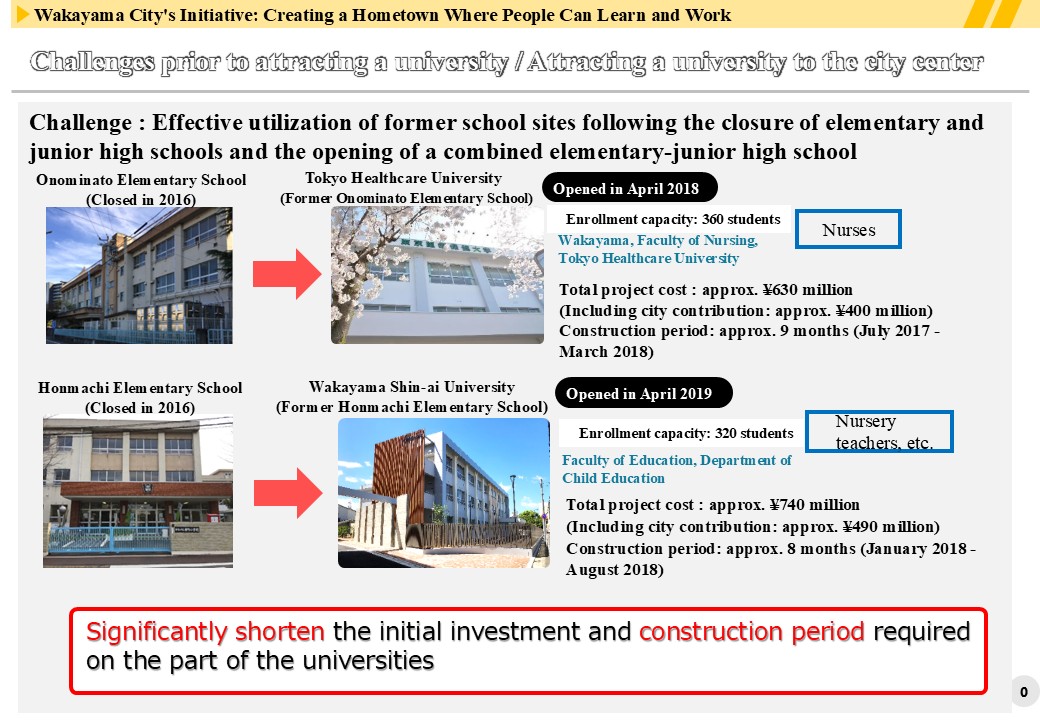
In Wakayama Prefecture, the rate at which high school students advance to universities outside the prefecture has long been the highest in Japan. As of 2015, approximately 90% of those advancing to university were enrolled in institutions outside the prefecture. In addition to the outflow of young people from the prefecture, Wakayama City has been facing challenges such as population decline in the city center and a shortage of specialized human resources – such as nurses – who support the region. It was considered that one of the factors contributing to this challenge was the limited number of universities, etc. compared with other prefectures. For this reason, Wakayama Prefecture and Wakayama City established the “Prefecture - City Policy Collaboration Council,” working to attract universities by utilizing the former sites of elementary and junior high schools that had been closed following the opening of a combined elementary–junior high school.
By utilizing the former school sites, the initial investment and construction period required on the part of the universities were significantly reduced, enabling the city to attract multiple universities, including Tokyo Healthcare University in 2018 and Wakayama Shin-ai University in 2019. As a result, the percentage of high school students enrolling in universities outside the prefecture decreased to approximately 81% by 2023, while the employment rate within the prefecture for graduates of universities in the city rose from about 28% in 2018 to around 42% in 2023. Furthermore, students have become increasingly active in social contribution and community engagement (Figure 1-1-9).
Column 02 Enhancements in Financial Support Measures for Higher Education in Recent Years
Regardless of a family’s financial circumstances, it is essential to ensure that everyone has equal opportunities to receive a high-quality education and to fully develop their individuality and potential. To this end, from the perspectives of ensuring equal educational opportunities and addressing the rapid decline in the birthrate, MEXT has been working to reduce the financial burden of higher education through a nationwide system funded by public resources (Figure 1-1-10). The enhancement of existing burden-reduction measures has enabled financial support to reach a larger number of students, resulting in tangible effects such as an increase in the enrollment rate in higher education among students from low-income households.
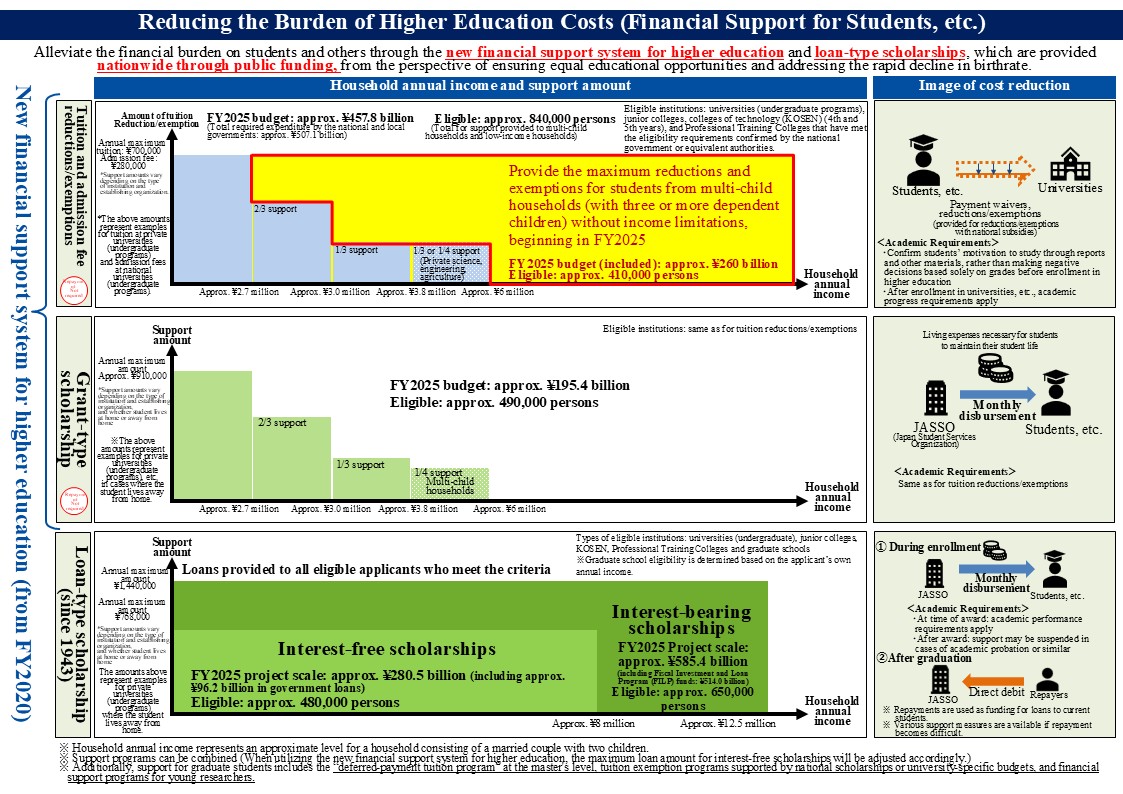
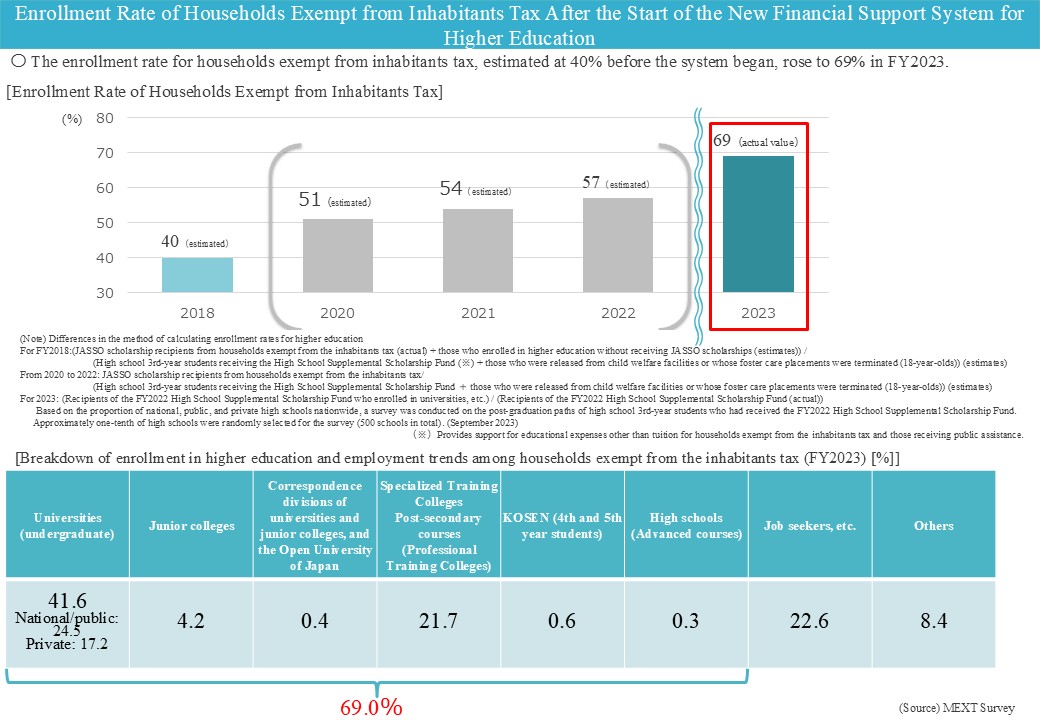
Japan has provided financial support to students through loan-type scholarships, which require repayment after graduation. In addition, in FY2017, grant-type scholarships, which do not require repayment, were introduced to support students facing particularly severe financial hardship. In April 2020, in light of the fact that children from economically disadvantaged families tend to have lower enrollment rates in higher education, the government introduced a new financial support system for higher education (hereinafter referred to as “the new system”) targeting low-income households. This system combines a substantial expansion of grant-type scholarships and the establishment of a new program for the reduction and exemption of tuition and admission fees. Under this system, households exempt from inhabitants tax receive support at a level that effectively renders higher education tuition-free, while households with slightly higher income levels receive graduated assistance based on income to prevent any sharp discontinuity in support across the system. The enrollment rate in higher education among households exempt from the inhabitants tax was estimated at approximately 40% in FY2018, prior to the introduction of the new system. By FY2023, this rate had risen to about 69%, indicating that the system has contributed to increasing enrollment in higher education institutions (Figure 1-1-11).
On the other hand, it is also important to reduce the burden of higher education costs from the perspective of addressing the declining birthrate, a major challenge facing Japan. Given that the cost of education is often cited as a major reason why families are unable to have their desired number of children, it is essential to steadily advance efforts to reduce this burden, particularly in higher education, where cost reduction is an urgent priority. These efforts are also crucial from the perspective of ensuring equal educational opportunities. The Acceleration Plan of the “Children's Future Strategy," approved by the Cabinet in December 2023, included enhancing scholarship programs and establishing a deferred-payment tuition program as measures to reduce the burden of higher education costs.
Based on this strategy, a deferred-payment tuition program was introduced in FY2024 for master’s students in graduate schools. Under this program, tuition fees are not collected during enrollment; instead, payment is deferred and linked to post-graduation income.
Furthermore, the upper income threshold for eligibility under the repayment reduction scheme for loan-type scholarships was raised. In consideration of alleviating the financial burden during the child-rearing years, the threshold was increased to ¥5 million or less for households with two children, and to ¥6 million or less for those with three children.
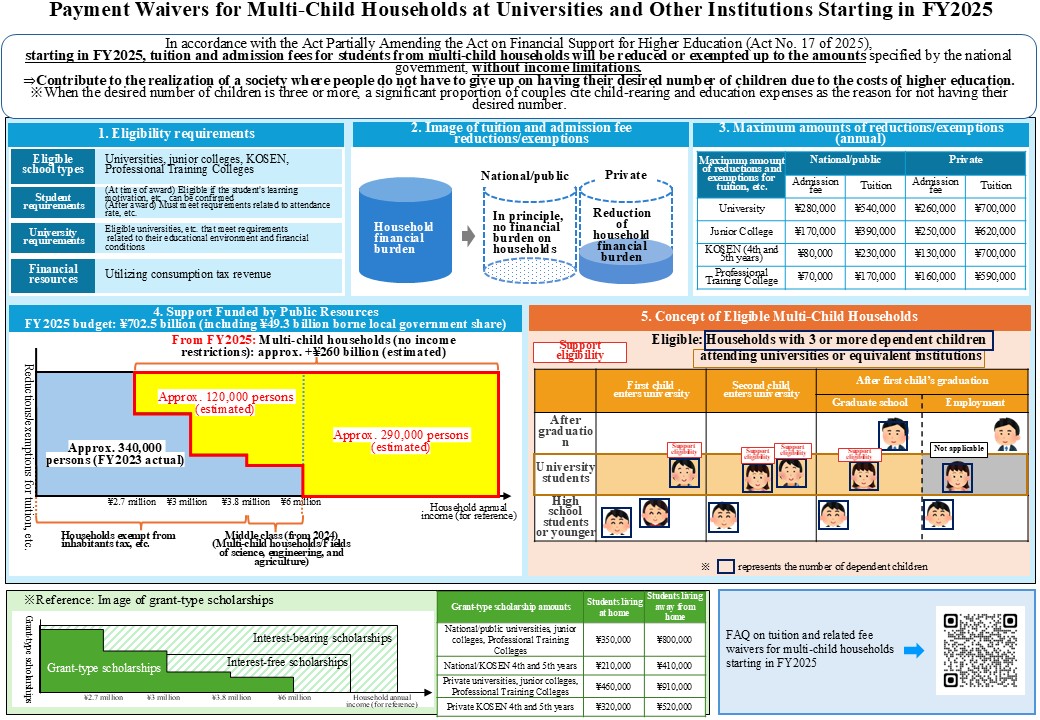
Furthermore, the new system has been reviewed from the perspective of addressing key government challenges, namely ‘measures to address the rapid decline in birthrate’ and ‘promotion of growth areas such as digital and green industries.' In light of these objectives, the government has expanded the scope of support—previously unavailable to middle-income households—to include multi-child households with three or more dependent children and students enrolled in undergraduate programs at private universities in the fields of science, engineering, and agriculture, recognizing these groups as particularly in need of financial burden reduction. Furthermore, as the inability to have the desired number of children due to childcare and educational expenses is particularly evident among couples who ideally wish to have three or more children, the government will further enhance support for multi-child households to eliminate situations in which higher education costs prevent families from realizing their desired family size. From FY2025, pursuant to the Act Partially Amending the Act on Financial Support for Higher Education (Act No. 17 of 2025), enacted during the 217th session of the Diet, tuition and admission fees for students from multi-child households will be exempted up to a certain amount specified by the government, without imposing income restrictions. This expansion will help alleviate the financial burden of tuition and admission fees for households with three or more children during the period when such expenses are most concentrated (Figure 1-1-12).
From the perspective of ensuring equal educational opportunities and addressing the rapid decline in birthrate, MEXT will continue its efforts to reduce the financial burden of higher education.
お問合せ先
Education Policy Bureau Policy Division